See the whole shed
Review construction, condition, contents, base, and nearby property.
The backyard location often matters as much as the shed. A narrow gate, tight turn, terraced yard, irrigation line, or long carry can change how material is separated and moved.
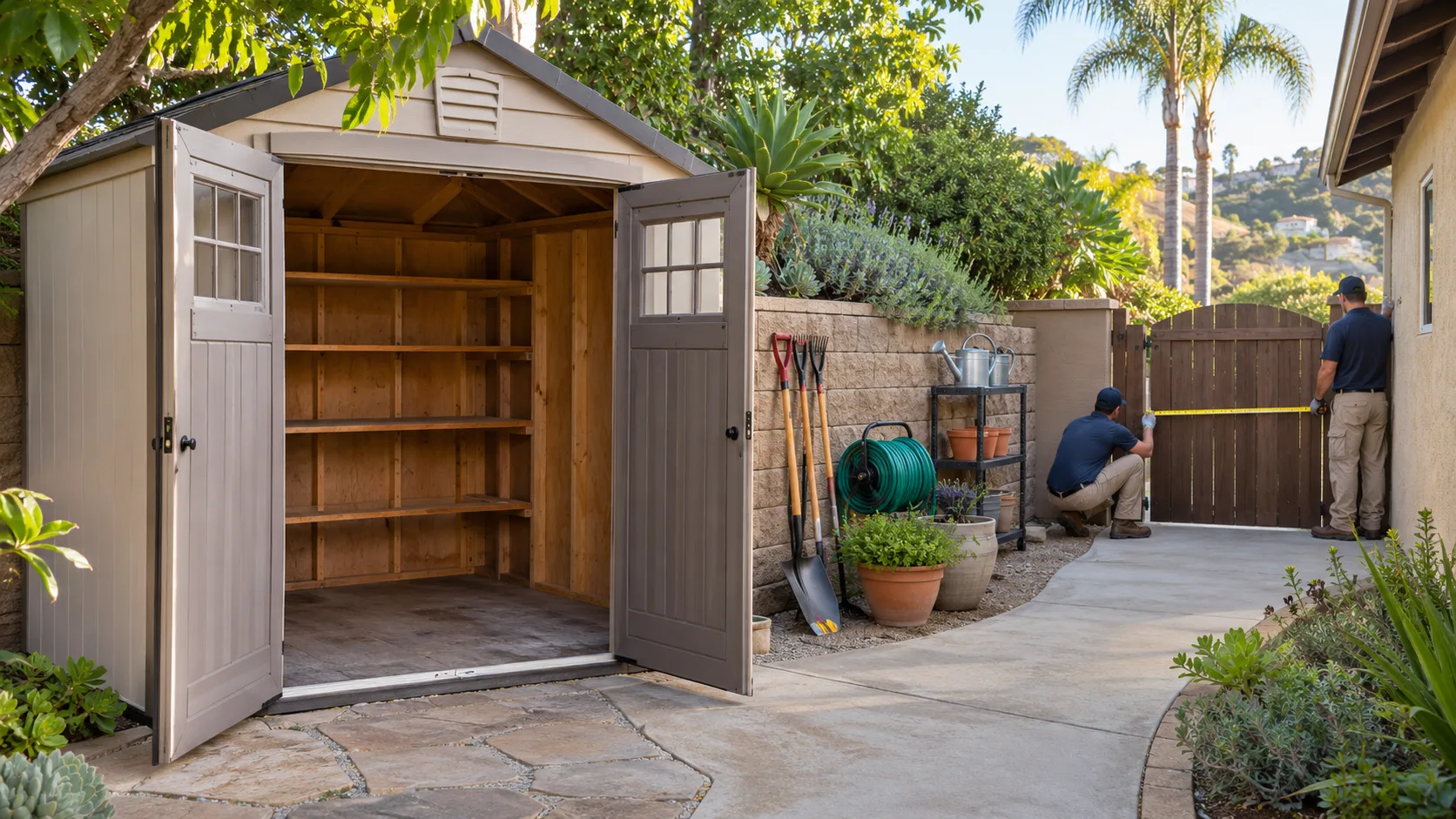
Fence removal, crane access, tree work, and landscape repair are not assumed.
Access through a neighbor’s property requires permission arranged by the property owner.
Soft ground, steep grades, retaining walls, and overhead lines need advance review.
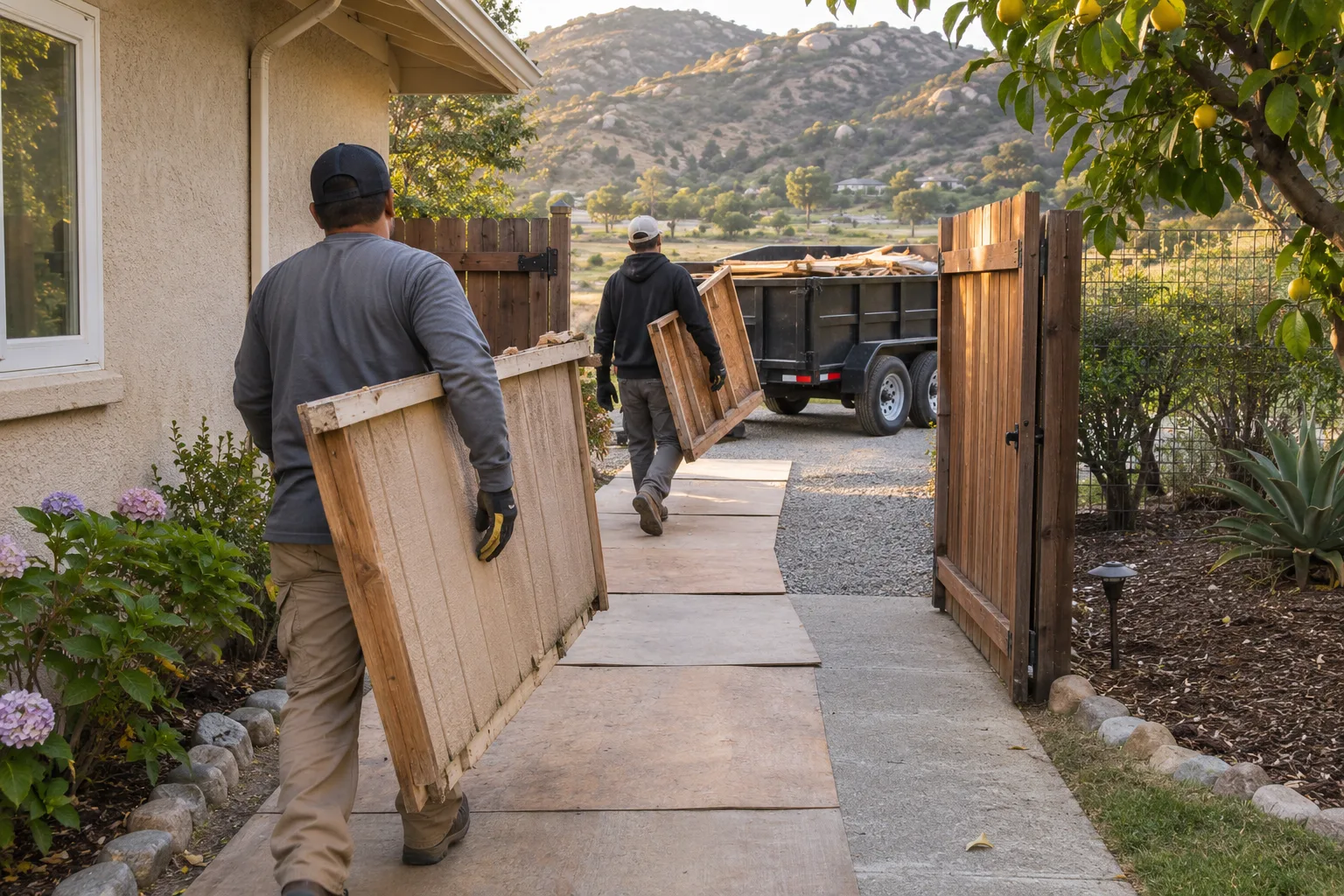
Exact steps follow the structure, access, utilities, local requirements, and approved scope.
Review construction, condition, contents, base, and nearby property.
Match section size and handling to the narrowest points on the route.
Separate and load approved material in a sequence suited to the job.
A photo and measurement checklist for describing the shed, its base, contents, and route to the street.
Ask for excluded items and the finish condition to appear in the written scope.
There is no single number because sections can sometimes be made smaller. Measure the narrowest clear opening and photograph both sides of the gate.
Explain the available routes before scheduling. A route through the home or over a wall changes the assessment and may not be suitable.
It can. Distance, grade, turns, and surfaces affect handling time and how material can be moved.
Have the material, approximate size, base, contents, gate width, and carry path ready.