See the whole shed
Review construction, condition, contents, base, and nearby property.
Wood sheds vary from light panel kits to framed workshops with shingles, subfloors, and anchored skids. Rot can make a structure weaker without making it lighter or safer to handle.
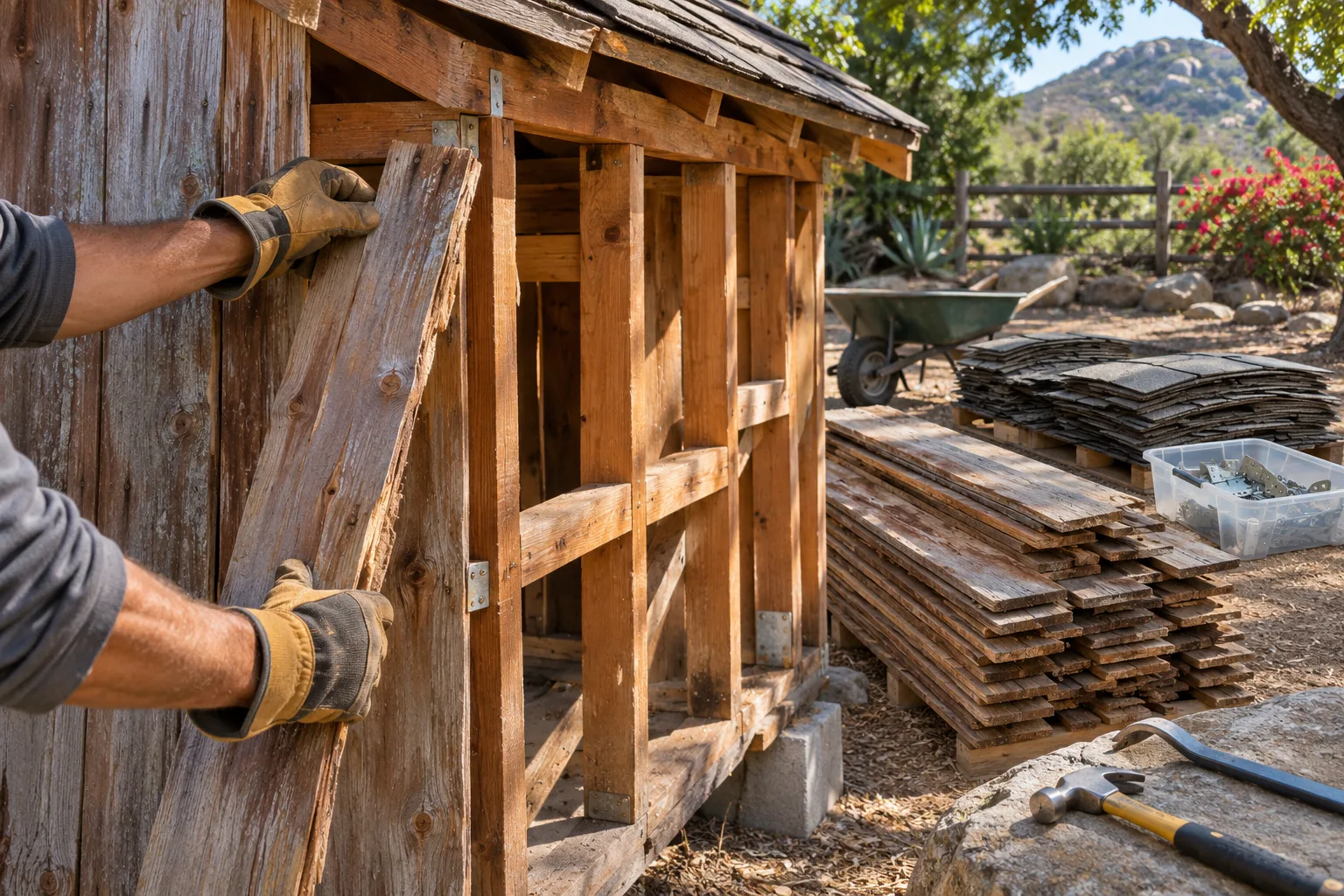
Suspect lead paint, asbestos-containing products, treated wood, and unknown coatings need identification.
Concrete bases and buried anchors are separate unless written into scope.
Usable-material salvage cannot be promised without an approved plan and destination.
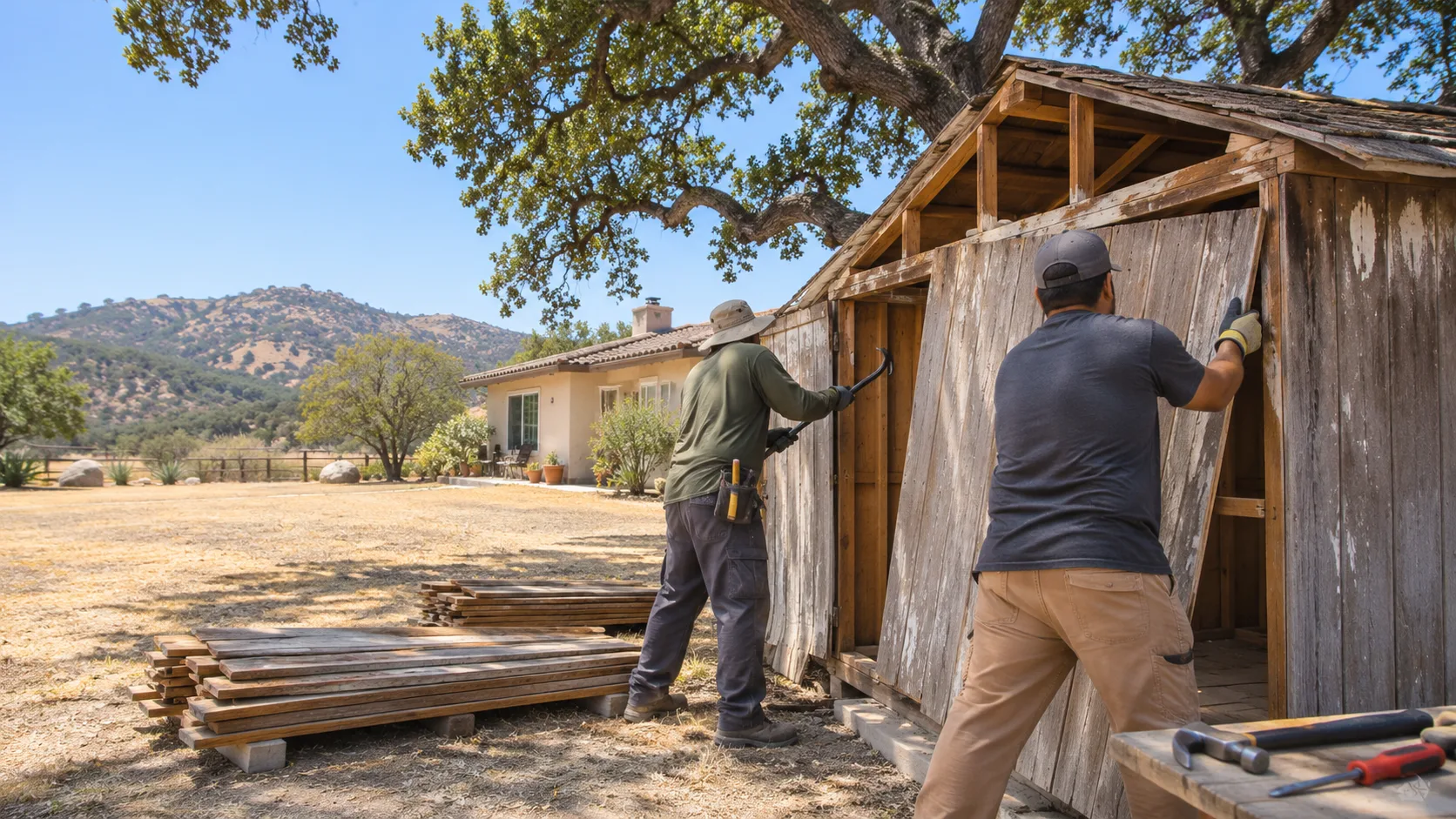
Exact steps follow the structure, access, utilities, local requirements, and approved scope.
Review construction, condition, contents, base, and nearby property.
Match section size and handling to the narrowest points on the route.
Separate and load approved material in a sequence suited to the job.
Compare framing, fasteners, roofing, sharp edges, corrosion, debris handling, and access needs.
Ask for excluded items and the finish condition to appear in the written scope.
Not necessarily. Rot can reduce predictable support and make panels break apart during handling.
Some material may be reusable, but condition, fasteners, coatings, labor, and an actual destination decide whether salvage is practical.
Show the roof in the estimate photos. Roofing adds weight and may involve material that needs separate assessment.
Have the material, approximate size, base, contents, gate width, and carry path ready.