See the whole shed
Review construction, condition, contents, base, and nearby property.
A storage shed can be two jobs at once: deciding what happens to the contents and removing the building. A simple inventory prevents tools, records, fuel, or keepsakes from being mixed into demolition debris.
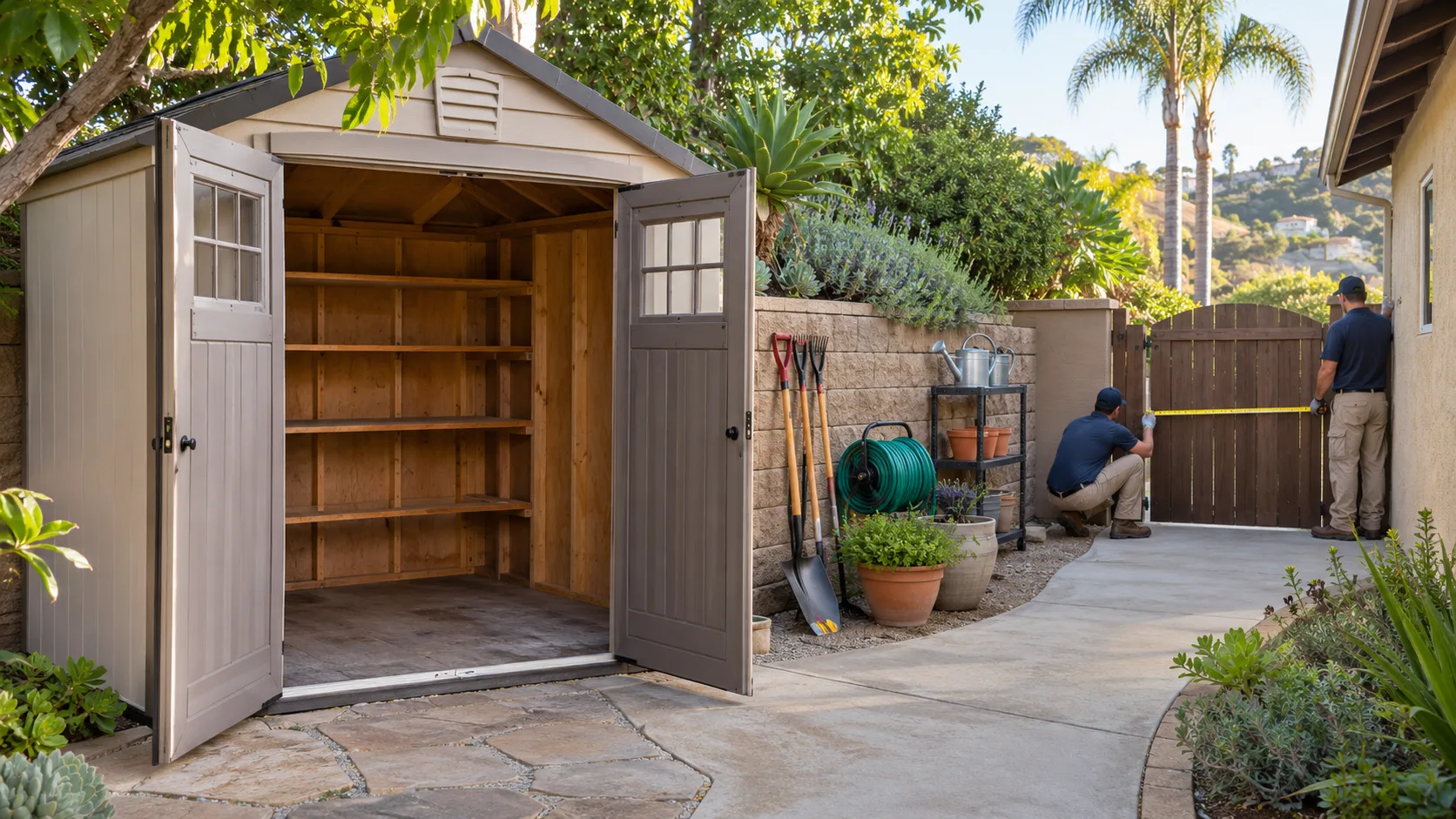
Customer property should be removed or clearly marked before work.
Fuel, paint, pesticides, propane, batteries, and unknown containers need separate handling decisions.
Built-in electrical panels, plumbing, or permanent workbenches require review.
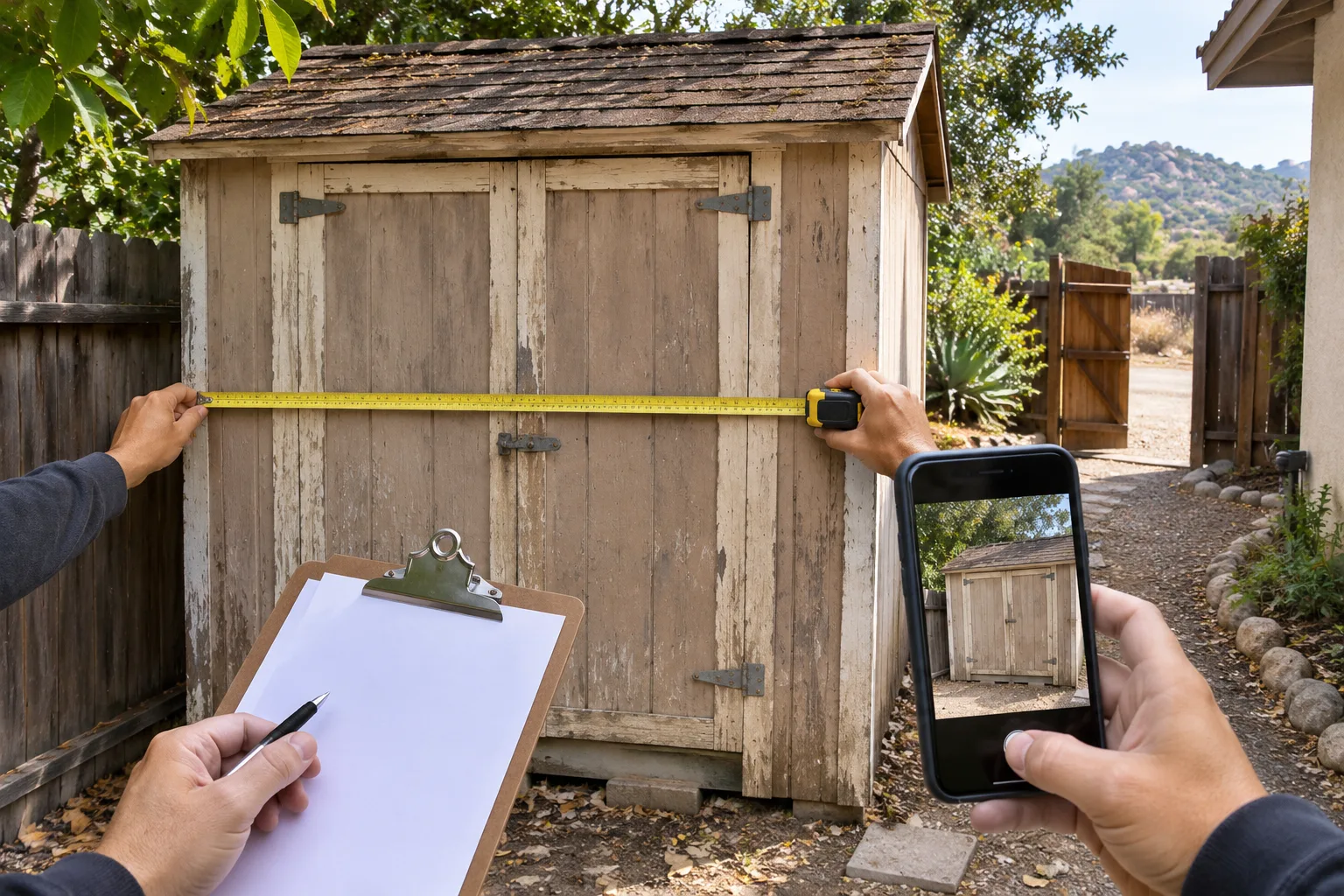
Exact steps follow the structure, access, utilities, local requirements, and approved scope.
Review construction, condition, contents, base, and nearby property.
Match section size and handling to the narrowest points on the route.
Separate and load approved material in a sequence suited to the job.
A practical keep, remove, and special-handling checklist for tools, records, fuel, paint, batteries, and fixed storage.
Ask for excluded items and the finish condition to appear in the written scope.
Start with documents, keys, tools you use, keepsakes, and anything with personal information. Then isolate fuel, paint, batteries, propane, and unknown containers.
Point out fixed shelves and benches. They affect dismantling order and debris volume.
Only items you intend to keep. Items proposed for removal should be listed so the estimate separates contents from the structure.
Have the material, approximate size, base, contents, gate width, and carry path ready.