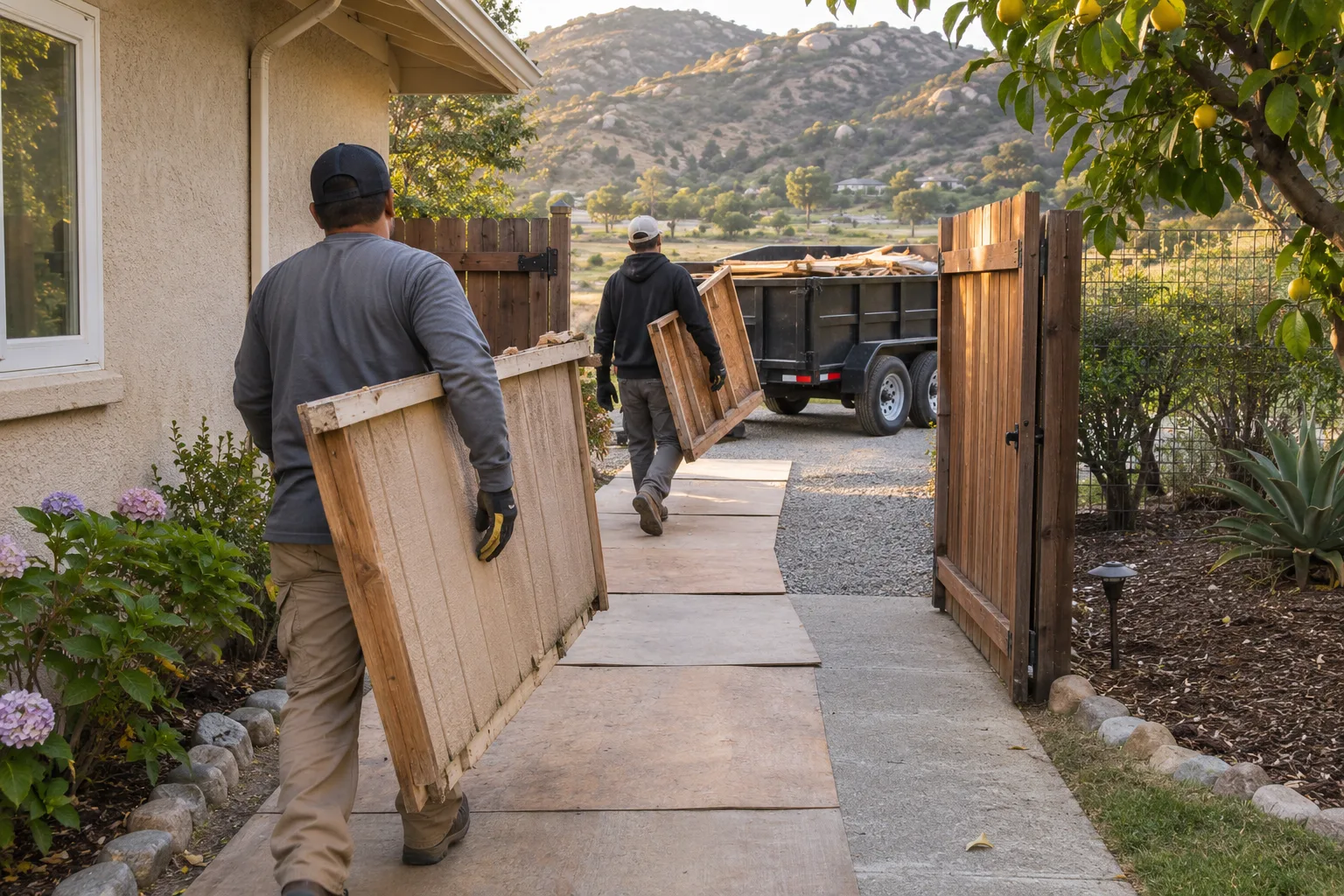
Start at the legal loading point
Identify where a truck or trailer can actually stop without blocking unsafe areas or relying on unapproved property. Work backward from that point to the debris.
Find the narrowest and weakest points
Measure gates and tight turns. Note steps, cracked paving, soft soil, septic areas, irrigation, low branches, wires, pool equipment, and surfaces that need protection.
Match panel size to the route
Long framing and sheet material need turning space. If dismantled pieces cannot clear the route, the pile may need further controlled separation before loading.
Keep sharp and unstable debris isolated
Do not rest panels where children, pets, or passersby can reach them. Avoid climbing on mixed piles. Point out exposed nails, glass, jagged metal, and hidden heavy sections.
Use this checklist
- Approved loading position
- Distance from pile to vehicle
- Gate width and turning space
- Steps, slope, and surface type
- Longest and widest debris pieces
- Sharp, heavy, or unstable material
- Property and landscape protection needs
For the service scope, see shed hauling details. When the structure and access are clear, prepare the estimate notes or call (202) 555-0178.